A collection featuring Piret Jaaks’ play to be presented at the Avignon Theatre Festival
01.07.2026 14:02
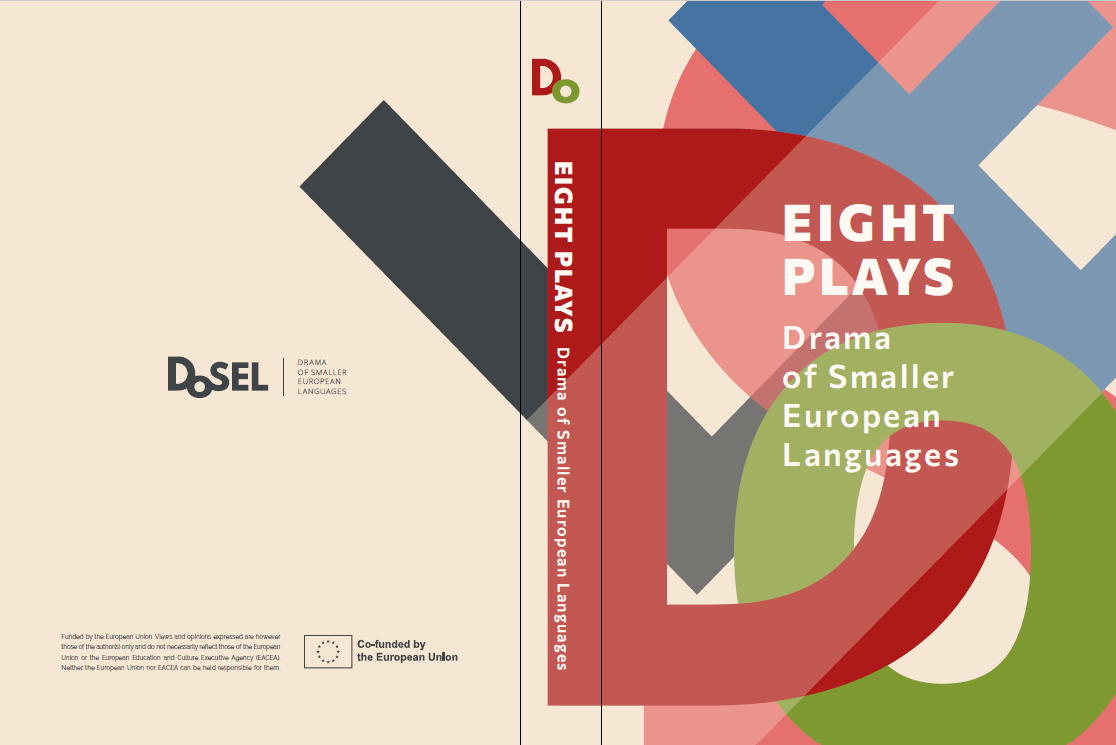
DoSEL – Drama of Smaller European Languages, an international project focused on the translation and development of plays written in smaller European languages, of which the Estonian Theatre Agency is a partner, has reached its next milestone: the English-language play collection “EIGHT PLAYS. Drama of Smaller European Languages.” Estonia is represented in the collection by Piret Jaaks’ science fiction play “Do Animals Know How to Count?” (2019), translated into English by Justin Petrone. The book will be presented on July 9th, 2026, at the prestigious Avignon Theatre Festival in France.
The presentation will take place as part of the European Theatre Talks series organized by the European Theatre Convention (ETC) at the Cloître Saint-Louis in Avignon, where Rok Bozovičar, director of the Prešeren Theatre in Kranj, Slovenia, and project leader, will introduce the DoSEL project and the collection of plays.
The collection includes the following translations of plays:
- Eneko Sagardoy, “Moto – Membra Jesu Nostri,” translated from Basque by Justin Peterson and Tim Nicholson
- Dora Šustić, “Pičman,” translated from Croatian by Vladislav Beronja
- Lon Kirkop, “A Moon of Our Own,” translated from Maltese by Kat Storace
- Lluïsa Cunillé, “The Donkey and the Stone,” translated from Catalan by Dustin Langan
- Maša Pelko, “Für Ophelia (A Mythology of Drowning),” translated from Slovenian by Barbara Skubic
- Jeton Neziraj, “The Adventures of the Bosch Family in Unmikistan”, translated from Albanian by Alexandra Channer
- Ekaterina Georgieva, “Free Falling”, translated from Bulgarian by Atanas Igov
- Piret Jaaks, “Do Animals Know How to Count?”, translated from Estonian by Justin Petrone
“As Umberto Eco famously wrote – and as we heard many times during this project – “The language of Europe is translation.” Translation is not merely a technical process of transferring words from one language to another; it is an act of encounter, curiosity, and mutual recognition. It allows stories to travel, ideas to resonate across borders, and cultures to discover one another. The eight plays gathered in this volume are the result of that belief. Through translation, they have found a shared space in which they can be read, discussed, staged, and reimagined by audiences and theatre professionals across Europe and beyond,” writes Rok Bozovičar in the introduction.
The editor of the collection is Dino Pešut, managing editor Tamara Bračič Vidmar, language editor Jana Renée Wilcoxen, and graphic designer Ana Bassin. The book was published by Prešeren Theatre Kranj, and will be distributed in Estonia by the Estonian Theatre Agency.
The goal of DoSEL is to increase the international recognition and accessibility of dramatic works originally written in smaller European languages and to encourage their more frequent staging. The project is a collaboration between eight European cultural organizations, including the National Agency for the Performing Arts from Malta, the Arriaga Theatre and Sala Beckett from Spain, the Croatian National Theatre in Zagreb, the Estonian Theatre Agency, the National Theatre of Kosovo, the Ivan Vazov National Theatre from Bulgaria, and the Prešeren Theatre from Slovenia.
Find out more about the project here: https://dosel.eu/
In the photo: cover of the collection “EIGHT PLAYS. Drama of Smaller European Languages”
Funded by the European Union. Views and opinions expressed are however those of the author(s) only and do not necessarily reflect those of the European Union or the European Education and Culture Executive Agency (EACEA). Neither the European Union nor EACEA can be held responsible for them.